Collector Guide
How to Spot a Fake Pokémon DS Game
Fake Pokémon DS games flood online marketplaces — especially HeartGold and SoulSilver. These six checks take a couple of minutes and catch nearly every bootleg.
Step-by-step checks
1. Label print and product code
Real: Crisp art and text, a clean Nintendo DS logo, and a small product code starting with NTR- (or TWL- on DSi-enhanced games such as Black 2 and White 2) printed along the bottom of the label.
Fake: Fuzzy or pixelated art, off fonts, a glossy sticker, a missing or wrong code, or a label that isn't centered.
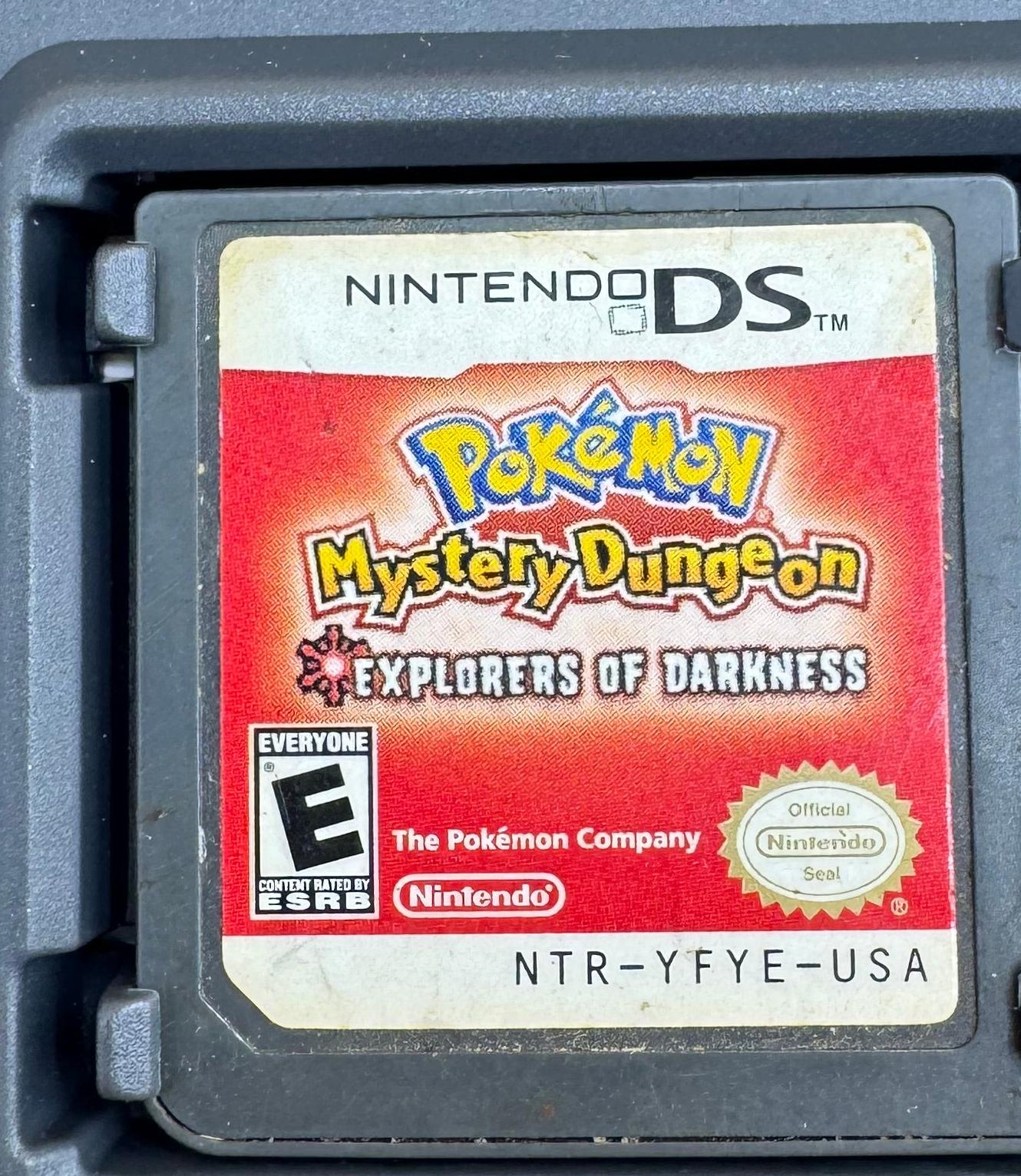
English US label close-up: read NTR-YFYE-USA along the bottom, the Nintendo DS lettering at the top, and the ESRB E rating at the lower left. Match the code to this exact game and region. This is a cropped real cartridge photo, not a counterfeit comparison.
Photo: The Gaming Temple — actual inventory example, not a stock image. Cropped to show the label.
2. Back of the cartridge
Real: Sharp molded text including Nintendo and the model number (NTR-005 on most standard DS carts), plus small molded codes. The plastic is evenly colored with clean seams.
Fake: Shallow or blurry lettering, missing text, uneven plastic color, or rough edges around the seams.
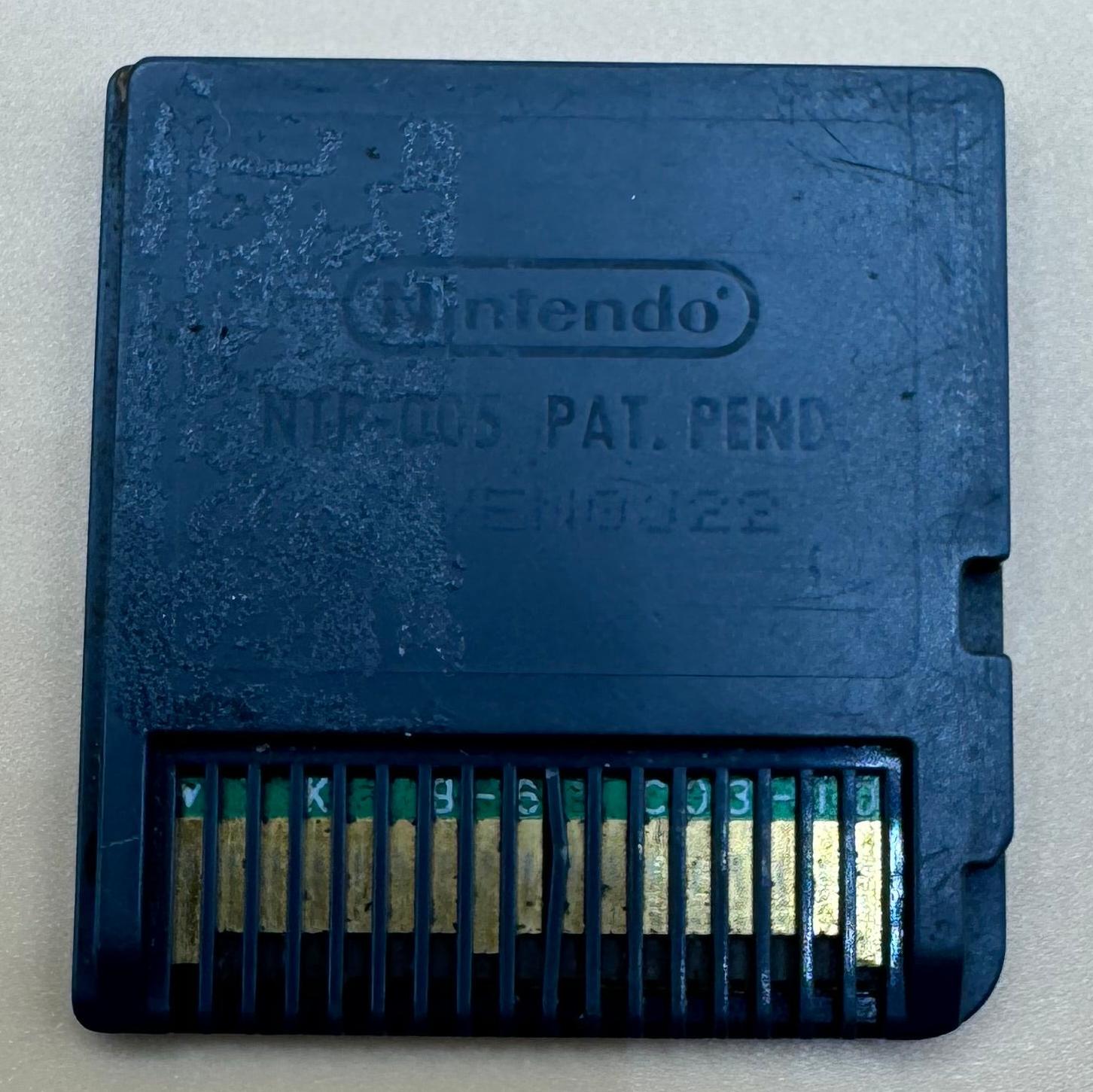
Rear close-up of the same English cartridge: Nintendo and NTR-005 are molded above the contacts; the gold pins sit between the plastic dividers. Wear and lighting make the inked rear code difficult to read here—ask for a clearer code photo before judging it. This standard DS shell is not an infrared example.
Photo: The Gaming Temple — actual inventory example, not a stock image. Cropped to show the shell and contacts.
3. Infrared window (HeartGold, SoulSilver, Black, White, Black 2, White 2)
Real: These games use a dark NTR-031 infrared-compatible shell that looks black normally but glows reddish when a strong light shines through it. It is translucent plastic, not a separate glass window. HeartGold and SoulSilver communicate with the Pokéwalker through the shell.
Fake: An opaque gray standard shell is a warning sign for these six games. A reddish translucent shell alone is not proof: other genuine infrared cartridges can be relabeled. Check the exact label, rear code and game operation too.
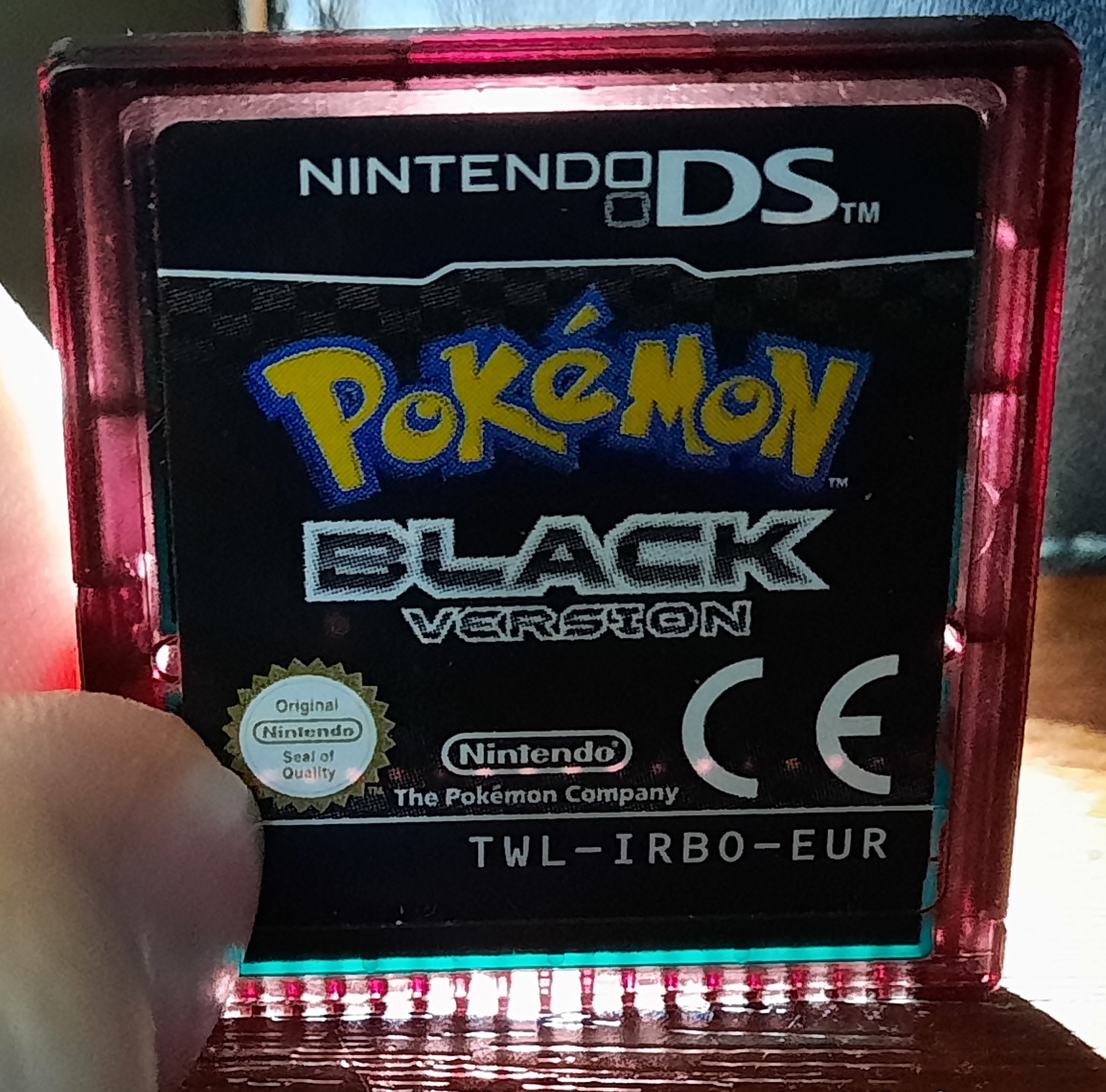
English-language Pokémon Black, European edition (TWL-IRBO-EUR): a light behind the cartridge makes its normally dark shell glow red, especially across the top and sides. This shows the infrared-compatible shell, not a separate glass window. HeartGold, SoulSilver, Black, White, Black 2 and White 2 use NTR-031 shells. Translucency is one check, not proof by itself—other genuine infrared games can be relabeled.
Photo: Peter Placzek / Wikimedia Commons, CC BY-SA 4.0. Unmodified.
4. Contacts and shape
Real: Gold contacts are evenly spaced and sit neatly inside the shell. The cart slides into the DS slot smoothly and clicks in.
Fake: Contacts sit too far out or look dull, and the cart may be slightly too thin, too thick, or loose in the slot.
Rear close-up of the same English cartridge: Nintendo and NTR-005 are molded above the contacts; the gold pins sit between the plastic dividers. Wear and lighting make the inked rear code difficult to read here—ask for a clearer code photo before judging it. This standard DS shell is not an infrared example.
Photo: The Gaming Temple — actual inventory example, not a stock image. Cropped to show the shell and contacts.
5. Case and inserts
Real: A sturdy case with sharp cover art, the correct rating box, and printed manual or inserts that match the region.
Fake: Thin, flimsy cases, blurry or slightly off-color covers, and missing or poorly printed inserts.
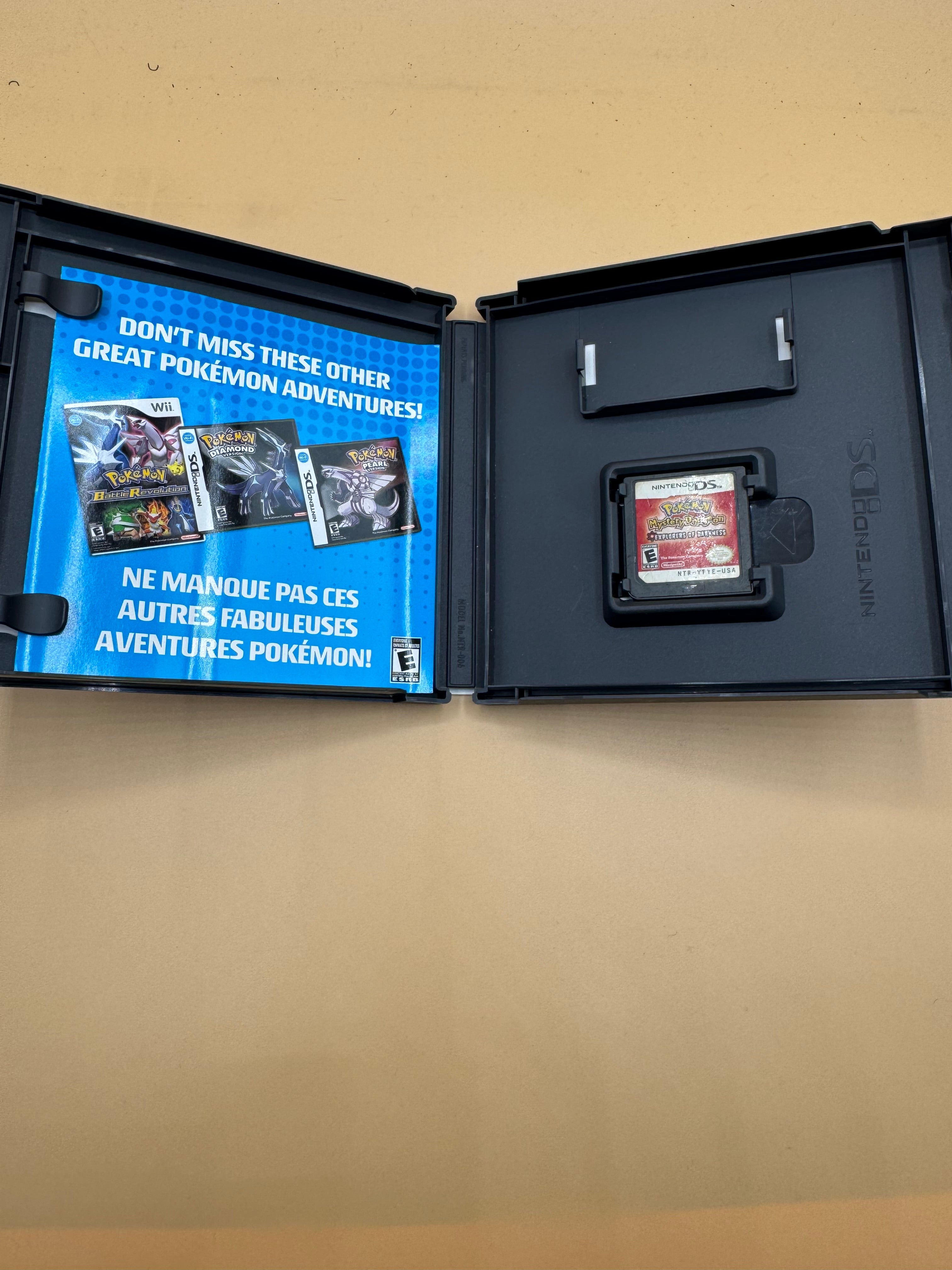
Case-and-inserts example: an actual Explorers of Darkness copy with its manual and cartridge. Check that the cover, manual and cartridge belong to the same game and region; a case alone cannot establish authenticity.
Photo: The Gaming Temple — actual inventory example, not a stock image.
6. Boot and save test
Real: Normal startup screens, saves stick, and online or wireless menus appear as expected.
Fake: Odd startup screens, frequent freezes, or saves that disappear or corrupt.
Quick red flags
- HeartGold or SoulSilver 'complete with Pokéwalker' at a fraction of going prices.
- Black 2, White 2 or Platinum sold 'new, no box' from overseas.
- The same seller has many identical copies in perfect shape.
- Only stock photos, or the seller won't show the back of the cart.
- Cart top on HeartGold/SoulSilver/Black/White is solid gray with no dark infrared window.
Common questions
Which Pokémon DS games are faked most?
HeartGold and SoulSilver are the most common fakes, followed by Platinum, Black, White, Black 2 and White 2. Diamond, Pearl and the Mystery Dungeon games show up too.
What's the fastest way to check HeartGold or SoulSilver?
Look at the top of the cartridge. Real copies have a dark see-through infrared window for the Pokéwalker. Fakes very often don't.
Do Japanese Pokémon DS games work on a US DS?
Yes. Standard DS games are region-free, so Japanese copies play on any DS, DS Lite, DSi or 3DS. Only DSi-only and 3DS games are region-locked.
Is a loose cartridge more likely to be fake than a complete one?
Loose carts are easier for fakers to sell, but fake cases exist too. Check the cartridge itself no matter what it comes with.
Shop with confidence
Every listing shows real photos of the exact copy you get. Want a closer look at a label or board? Ask us before you buy.
Also read: How to spot fake Pokémon GBA games