Collector Guide
Japanese Import Games: The Region Guide
Importing is the cheapest door into retro collecting — if you know which games will actually boot. Here's the region-lock picture system by system, plus what to check before you buy a Famicom, Super Famicom, or Game Boy import.
Region locks by system
Famicom / Super Famicom
Cartridge shape differs from NES/SNES
Famicom carts need an adapter for a US NES; Super Famicom carts fit an SNES after removing two tabs.
Nintendo 64
Region-locked
Japanese carts have different notches; a cart adapter or trimmed console tabs are needed.
GameCube / Wii
Region-locked discs
A Japanese disc needs Japanese hardware (or a modded console).
Game Boy / GBC / GBA
Region-free
Japanese carts play on any Game Boy family system worldwide.
Nintendo DS
Region-free
Japanese DS games play on any DS or DS Lite; DSi and 3DS titles are region-locked.
PlayStation 1 / 2
Region-locked
Japanese discs need a Japanese console or a mod.
Why collectors import
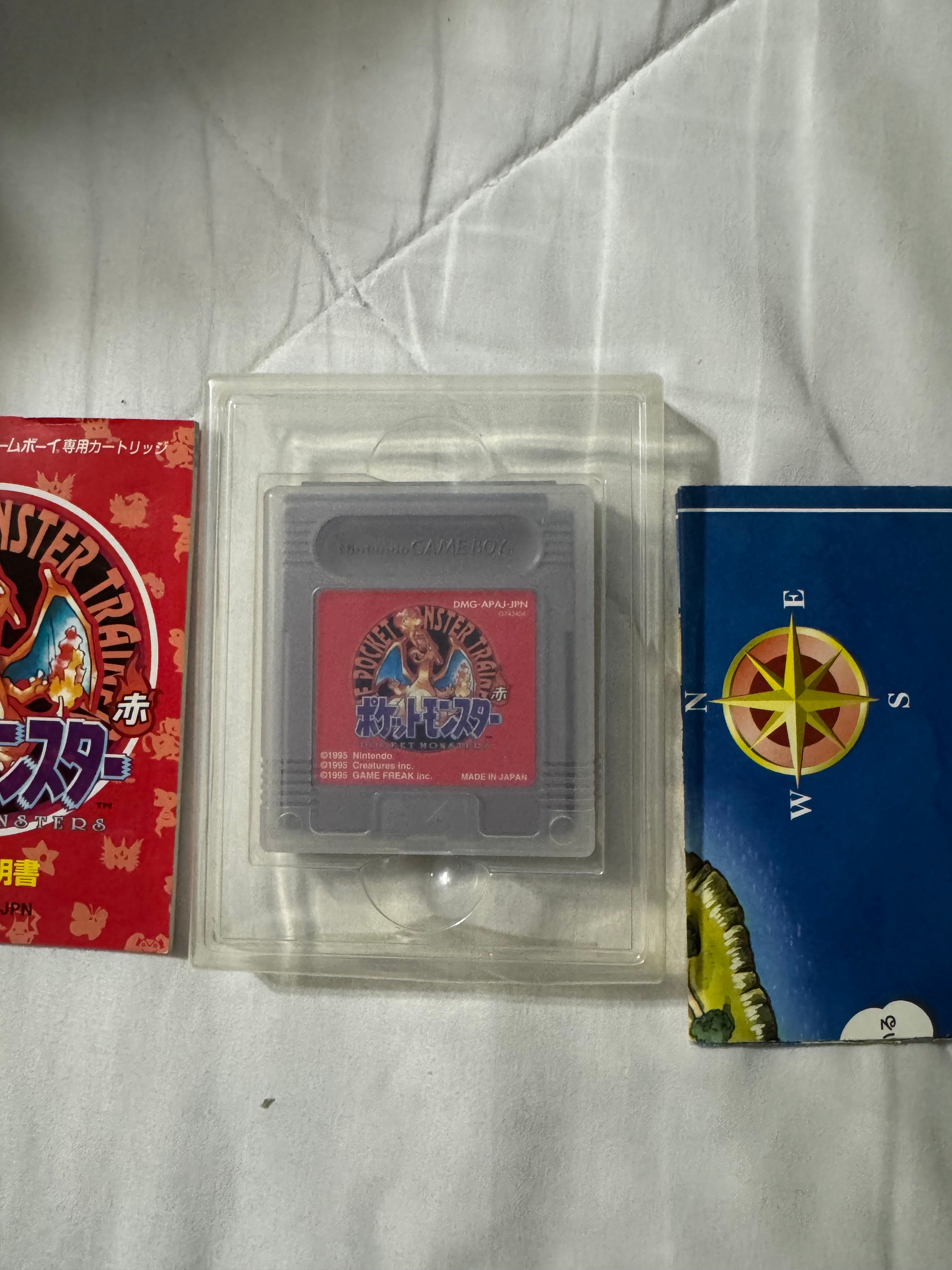
Japanese packaging example: Pokémon Red with its box, cartridge tray and Town Map insert. Ask the seller to lay out the included pieces like this so you can judge completeness rather than relying on the cover alone.
Photo: The Gaming Temple — actual inventory example, not a stock image.
Cheaper for the same game
Japan-region copies of major titles often cost a fraction of the US release, especially for RPG and platformer classics.
Art and packaging
Japanese cases, spine cards, and manuals are frequently the better-looking version, and many stayed in far better condition.
Never released here
Whole libraries — Famicom exclusives, Super Famicom RPGs, Japan-only Pokémon promos — simply never left the country.
Guide books
Ultimania and kouryaku guides are collectibles in their own right, packed with art you cannot find in Western releases.
Common questions
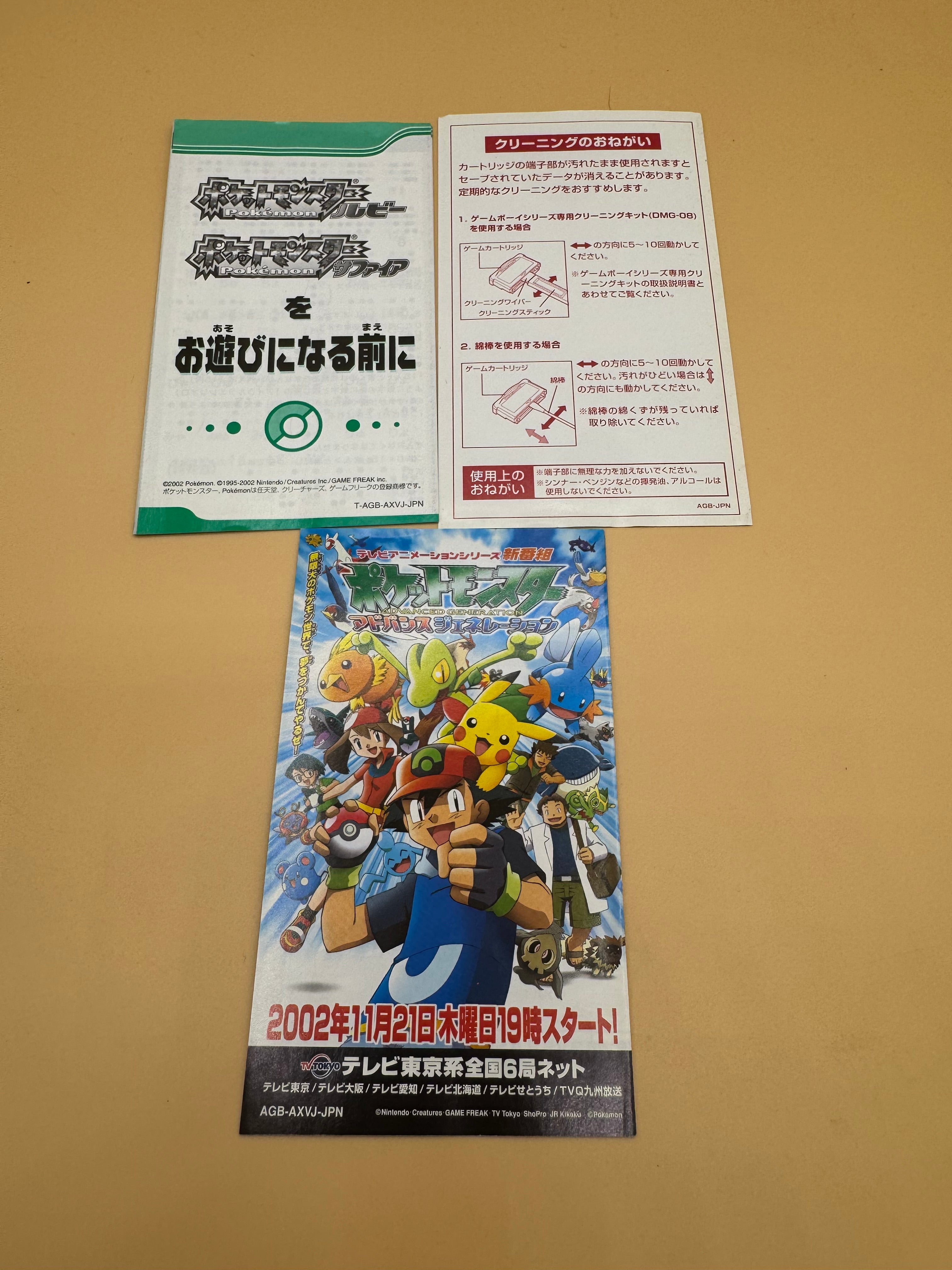
Manual-and-inserts example: Japanese Pokémon Sapphire paperwork. Japanese print and artwork are part of the collecting appeal, but the game's text remains Japanese even on region-compatible hardware.
Photo: The Gaming Temple — actual inventory example, not a stock image.
Do Japanese import games work on American consoles?
It depends on the system. Game Boy, Game Boy Color, Game Boy Advance, and original Nintendo DS cartridges are region-free and play anywhere. Famicom, Super Famicom, Nintendo 64, GameCube, Wii, and PlayStation releases are region-locked and need Japanese hardware, an adapter, or a modded console.
Are Japanese import games cheaper?
Very often, yes. Japanese print runs were large and the domestic collector market prices many classics well below their US counterparts, so importing is one of the cheapest ways into a retro library.
How do I tell a Japanese cartridge from a US one?
Look for Japanese text on the label, a different cartridge shape or notch pattern, and CERO or Nintendo of Japan markings on the back of the box. Super Famicom carts are rounder and shorter than SNES carts.
Are your imports authentic?
Yes. Every import we list is inspected in hand — label print, cart shell, board and packaging — and photographed as it actually is, including any wear.
Shop the import shelf
Famicom, Super Famicom, N64, GameCube, Wii, Game Boy, GBA, DS and 3DS Japan-region titles — plus Ultimania and kouryaku guide books.
Browse Japanese imports