
Collector Guide
Pokémon Card Grading Explained
A slab is a condition contract. Grading companies encapsulate a card, authenticate it, and assign a number that the whole market prices against. Here's how PSA, CGC, and BGS differ, what the graders actually look at, and when paying for a grade makes sense.
The three graders
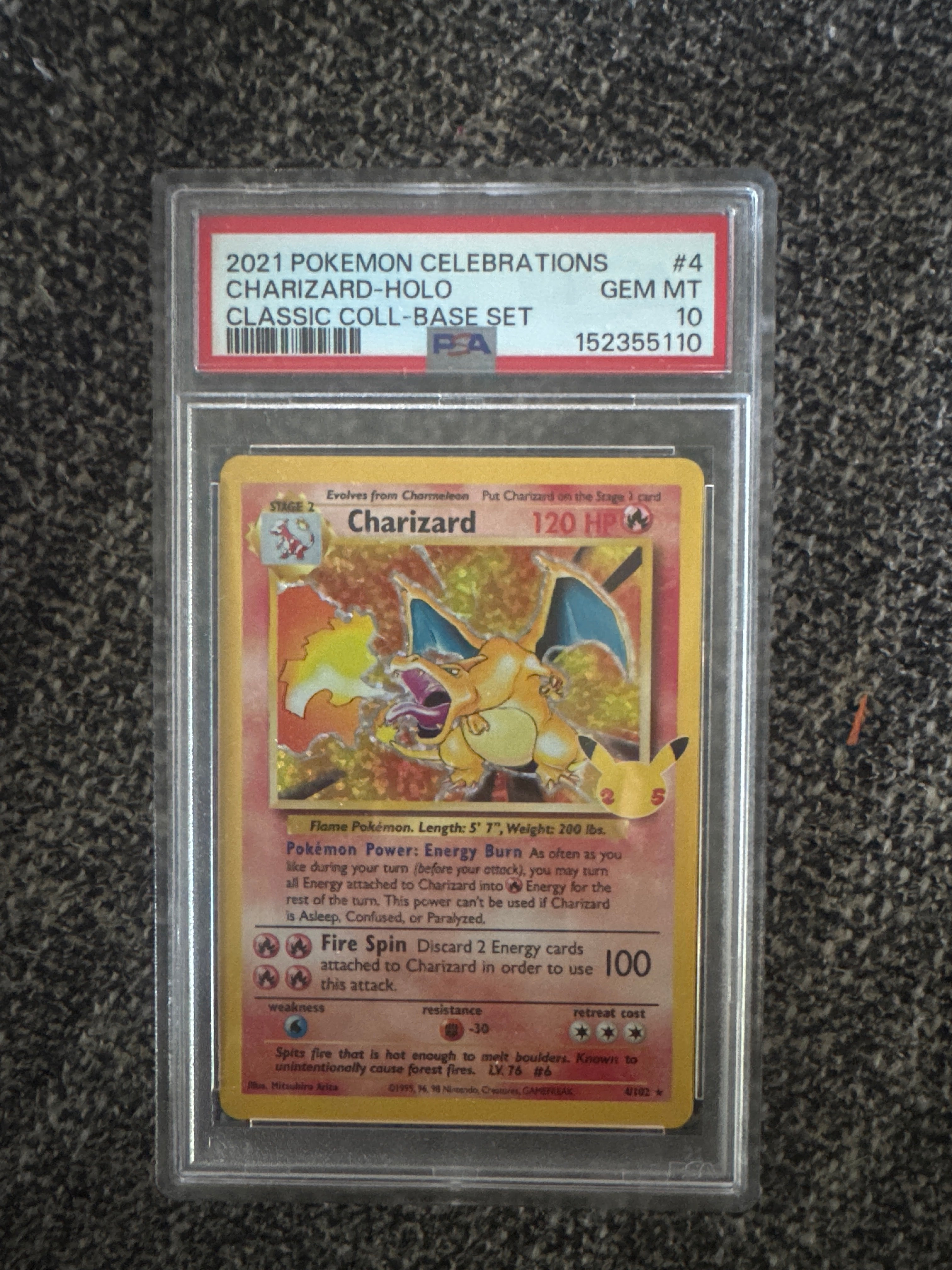
PSA label example: the card's set, identity, numerical grade and certification number sit above the card. Read the label and verify the number with PSA; do not infer a grade just from a flattering front photo.
Photo: The Gaming Temple — actual inventory example, not a stock image.
PSA
1–10, whole grades plus a 10 "Gem Mint"
The most liquid label in Pokémon. A PSA 10 typically commands the highest resale premium, and PSA 9 is the sweet spot for collectors who want a clean slab without the Gem Mint tax.
CGC
1–10 with half grades and Pristine 10
Known for tight centering standards and a subgrade breakdown. CGC 9.5 and Pristine 10 have grown fast in the modern-card market.
BGS
1–10 with half grades and Black Label 10
Four subgrades — centering, corners, edges, surface. A BGS 9.5 with strong subgrades often outperforms a plain 9, and Black Label 10s are the rarest tier in the hobby.
What decides the grade
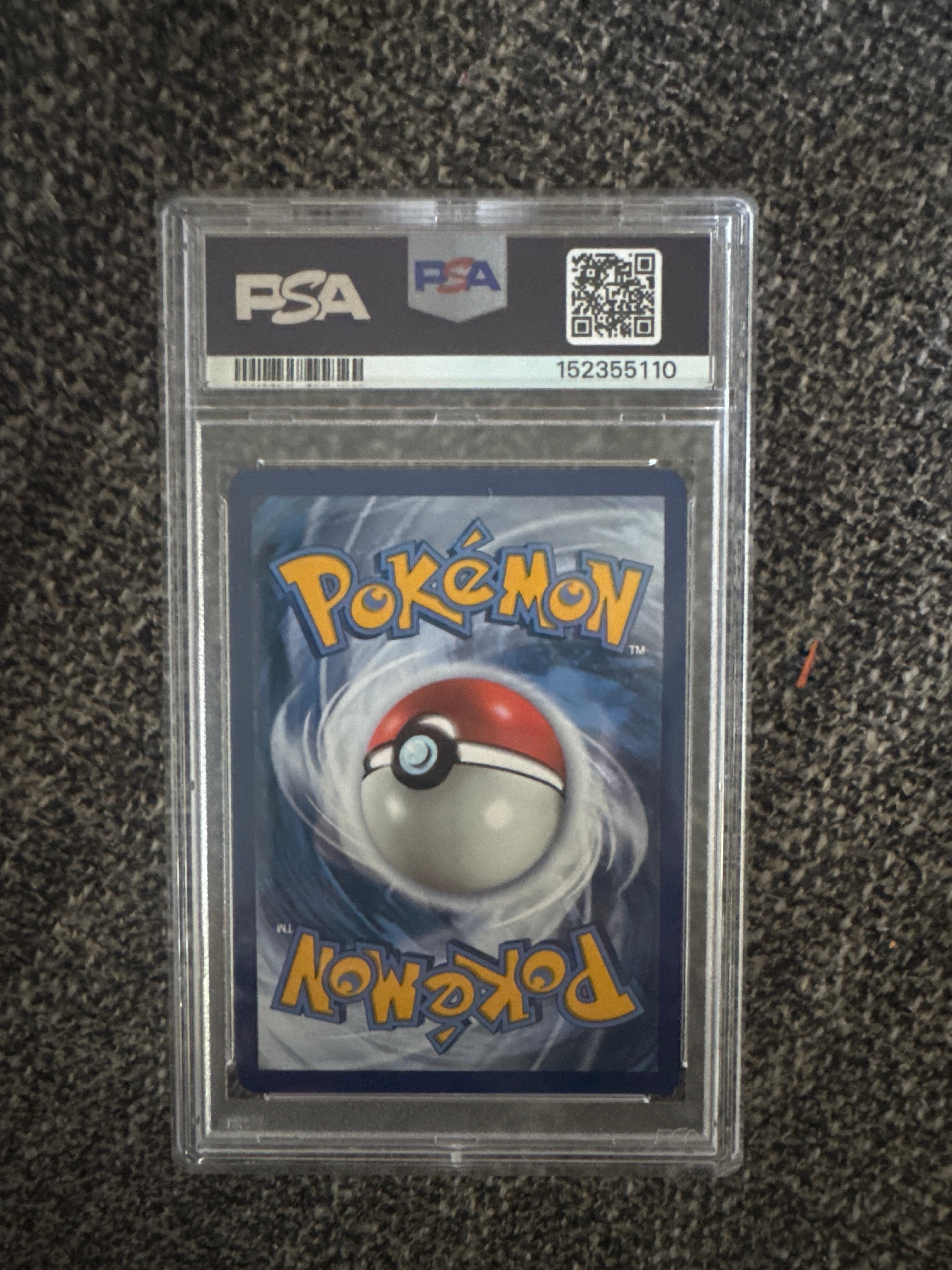
Back-and-centering example: inspect all four blue borders, corners and edges as well as the holder's reverse label. This photograph shows the card back, not a guaranteed close-up of every flaw; surface scratches require angled-light photos. These are PSA examples, not CGC or BGS holders.
Photo: The Gaming Temple — actual inventory example, not a stock image.
Centering
Front and back borders are measured. Off-center printing caps an otherwise flawless card at a 8 or 9.
Corners
Whitening or a soft tip is the most common reason a mint-looking card drops a grade.
Edges
Cut quality and chipping — especially visible on dark-bordered vintage holos.
Surface
Print lines, scratches, and holo scuffs. Angle the card under a light before you submit.
Common questions
What does PSA 9 mean on a Pokémon card?
PSA 9 is Mint: the card is sharp and clean with at most one minor flaw, such as slightly off-center printing or the faintest corner wear. It sits one step below PSA 10 Gem Mint and usually sells for a fraction of a 10.
Is PSA, CGC, or BGS best for Pokémon cards?
PSA has the deepest resale market for vintage Pokémon. CGC is popular for modern cards and half grades. BGS is favored when subgrades and Black Label potential add value. All three are accepted as authentic.
Does grading make a Pokémon card worth more?
For high-condition vintage and chase cards, yes — the slab proves authenticity and condition, which removes buyer risk. For common cards in average condition, grading fees usually exceed the value added.
How do I check a graded card is real?
Every slab has a certification number printed on the label. Look it up in the grader's public cert lookup and confirm the card, set, and grade match. Our listings photograph the label so you can verify before buying.
Shop verified slabs
Every card in our vault is authenticated by PSA, CGC, or BGS, with the label photographed.
Browse graded Pokémon cards